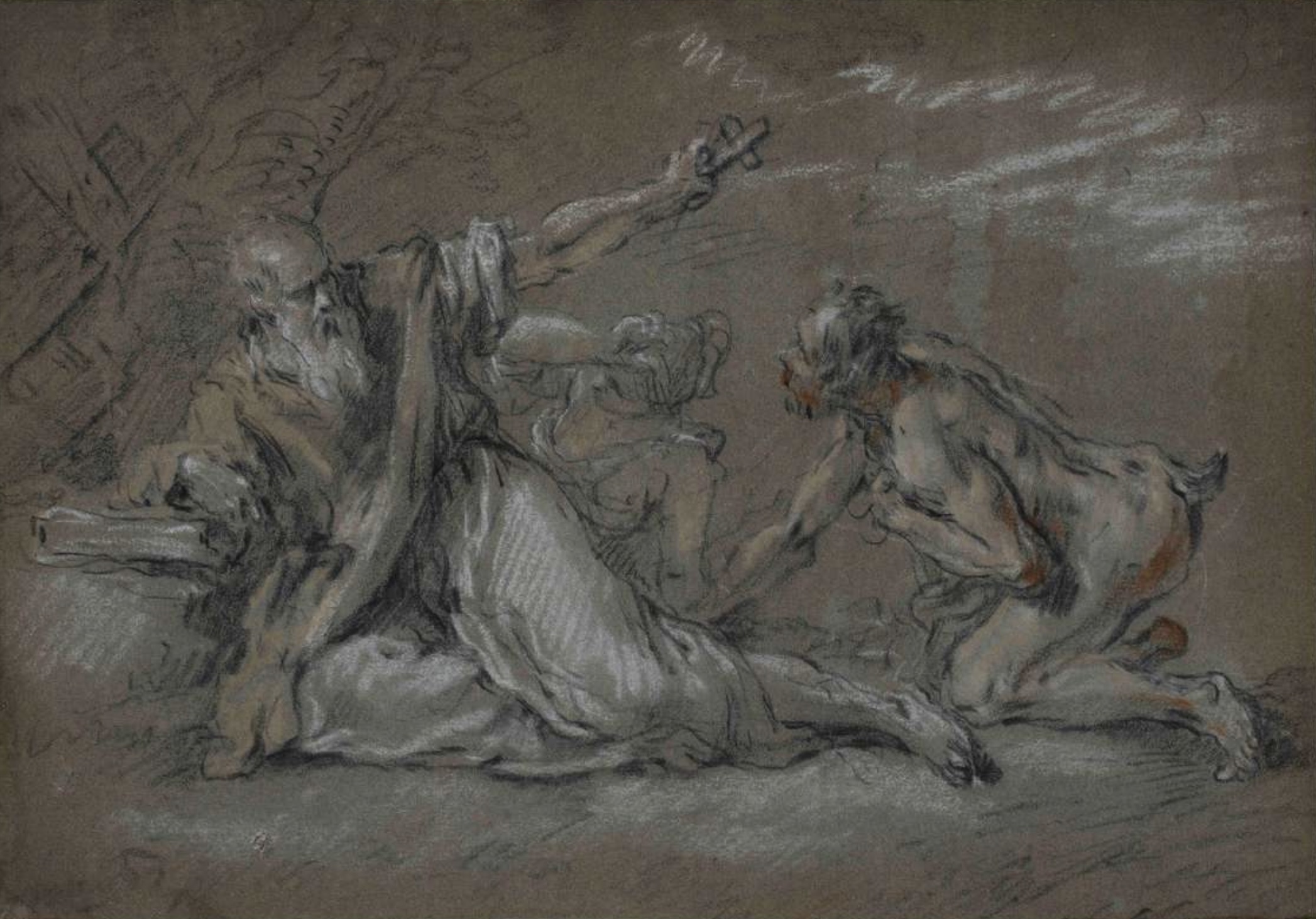
The Temptations of Saint Anthony
Sebastiano Ricci
(Belluno 1659 – Venezia 1734)
- Black, red, and white chalk on grey paper
- 190 x 268 mm
(Belluno 1659 – Venezia 1734)
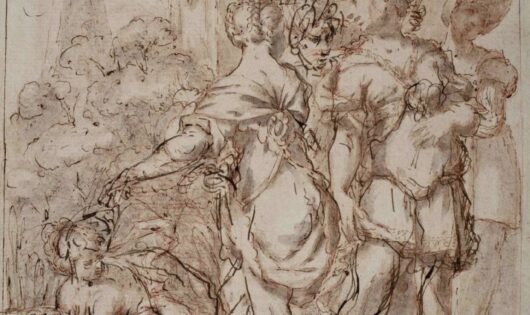
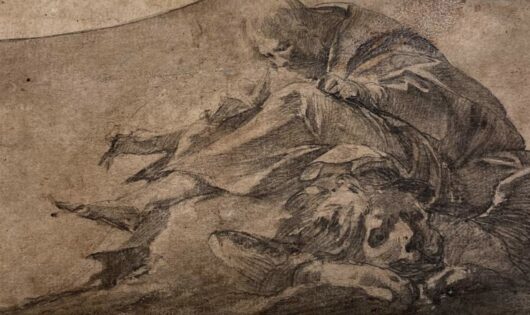
Sebastiano Ricci approached this subject multiple times throughout his career, rendering it in numerous pictorial variants (1). These works, and consequently the drawing under examination as well, belong to the phase in which the artist was influenced by Alessandro Magnasco, likely dating to the late 17th and early 18th centuries, when the painter was in Milan. Unlike the paintings, the sheet features only a hint of landscape, which serves to give greater prominence to the main figures: Satan, Saint Anthony, and a female figure, who can probably be interpreted as a temptation sent by the devil. Furthermore, the poses of Saint Anthony and Lucifer are very similar to those found in the painting now preserved in the Hermitage Museum in St. Petersburg, in which the figures are attributed to Ricci, while the landscape is the work of Antonio Peruzzini (2).
(1) A. Scarpa, Sebastiano Ricci, Milano 2006, figg. 143-145, pag. 431.
(2) Ibidem, cat. 434, pag. 298; fig. 144, pag. 431.